Two Gears
Nov 6, 2025
Intro
Early in my management career, I lived in Slack. Last thing before bed: evening messages. First thing in the morning, still in bed: overnight backlog. I felt productive. I was just busy.
Over the years, I’ve observed leaders stuck in one gear: some always firefighting, others always planning but never executing. The best ones balanced both operating modes. The challenge is not choosing between tactical and strategic, but knowing when to use each one. The real problem is staying in the same mode regardless of what the task at hand requires.
I believe it’s in balancing both modes that one becomes more effective. It’s about being thoughtful and conscious of which mindset or gear is needed at a given moment. One tool that has helped me over the years to make that distinction is what I call the Two Gears mental model.
Fast Gear vs Slow Gear
I frame most of my work through this lens: two gears, two modes of operating. It’s a simplification, but one I’ve found useful.
Fast gear: The operational work. Those tactical day-to-day tasks, operational meetings, tactical decisions, urgent matters. This is where most leaders live. Running from meeting to meeting, fire to fire, checking boxes on to-do lists, and cleaning up Slack messages and email boxes throughout the day. It’s critical work. Like putting coal on a steam engine, if you stop, the train stops.
But if you’re putting the coal on the engine, who’s thinking about the next generation of trains?
Slow gear: It is thinking not about the next day or week, but about the next year or two. For strategic thinking, for thoughtful planning and decision making on the long(er)-term initiatives that will set direction and cause the most impact. It’s the time spent defining, understanding, and communicating where we are heading, why, and to ensure there’s room to discuss how to get there.
Why use this model?
“If a man knows not to which port he sails, no wind is favorable” - Seneca
Because most of us don’t choose which gear to use, we default one, most of the times the fast one.
And it is natural to default to the Fast Gear. It requires less cognitive effort to deal with the immediate, urgent problem (a “fire”) than to tackle the complex, underlying issue, in a strategic way that prevents the fire from happening again in the future (Slow Gear).
As a mental model, it’s not a process, nor another tagging system. Once you internalize Two Gears, it happens automatically. You look at your calendar and notice: “I haven’t had a single slow-gear block this month.” You’re in a meeting and think: “Should I step back and deal with this strategically, or focus on the immediate solution?” The model doesn’t add a process. It adds awareness. And awareness changes behavior.
In action
I can frame any task I am working on into one of these two gears. These are a few easy examples to make the distinction clearer and the model more actionable:
On 1:1s Some topics are around ongoing initiatives, specific technical issues, prep for the next meeting, and discussing the technical options on an immediate project. Those are fast-gear topics. But if you switch gears to a slower pace, you can discuss where their career is heading, how it aligns with the company’s vision, and the opportunities and needs. Or the next quarter’s scope, how the company vision aligns with their team’s work, and so on.
On onboarding When new team members join, many companies use “X-days plans”: time to read docs, meet people, explore the codebase. All important. But too much exploration without execution creates a problem: no momentum. Weeks pass, no code shipped, no real impact, no practical learning. The opposite is also true. Throwing someone into urgent work without context, without explaining the bigger picture, the company’s goals, and how their team fits in, sets them up to fail. Balance is key. Time exploring: meeting people, reading documentation, understanding architecture, and repos. Time executing: working from the team’s board, shipping code, participating in code reviews, and pairing sessions. Fast gear gives them confidence. Slow gear gives them context. Both are necessary.
On prioritizing work If we think about delivery, most of the time our teams are dealing with and balancing long-term projects (Slow gear, e.g., new features, technical improvements) with short-term needs (Fast gear, e.g. small improvements and bug fixes). A team can’t, or shouldn’t, focus solely on one type of work, but this can be managed. Through a triage process that clearly identifies the urgency of new issues, or the introduction of time-boxed parts of the week focused on solving issues, and so on.
On technical decisions Namely, on software development, the bifurcation between doing a better, slower-to-implement solution, and a faster shortcut that works but is difficult to iterate and improve on, is constant. And again, there are no silver bullets here. It must be analysed case by case, but thoughtfully, with a full understanding not only of the benefits of the choice made but also its trade-offs. Is trading speed now for more flexibility in the future the best option, or must we quickly unlock a business need?
Reversal of the model
“Without strategy, execution is aimless. Without execution, strategy is useless.” - Morris Chang
What Happens Without Slow Gear
When you find yourself putting out fires, swamped in small tasks, it’s hard to find time to do strategic work. But this then becomes a self-fulfilling prophecy: if you don’t dedicate time to strategic solutions, you’ll remain trapped in the cycle of firefighting. A part of your job is to find ways for your area, and, as a consequence, your company, to do better, and If you don’t take time to plan for long-term impact, you’ll never have time to create it. Not focusing on slow gear work also sets a wrong example for those you lead. If your leader doesn’t focus on the strategy, do they value that behavior? Most of us are incentivized to mimic our company leaders’ behaviours as we believe that if it’s what they do, it is what they value.
What Happens Without Fast Gear
Seeing your manager focusing on details, from time to time, can set a positive example on keeping standards high, on not dropping the ball, and on following through. All key components of long-term successful groups. Getting your hands in the code, in the query that unlocks more visibility over important data, and in the small tool change that improves the team’s ways of working. It shows that you do care and that you are paying attention.
Gears and seniority
Gears are not about seniority or ranks. A large-company CEO can spend time handling fires just as much as an Engineering Manager responsible for a small team can, and should use a slow gear and plan and execute for a long-term future. It will be expected, though, that an executive member spends a significant part of their time working on long-term plans. I’ve seen senior executives falling into the trap of not spending enough time thinking about strategic topics and setting the direction for their teams. The other way around happens too, I’ve seen managers of small teams spending too much time planning what their team and area could look like in a distant future, planning all the processes they should introduce, designing new ways of work, and yet, not spending enough time supporting their teams on daily tasks, and what they are building now.
Wrapping-up
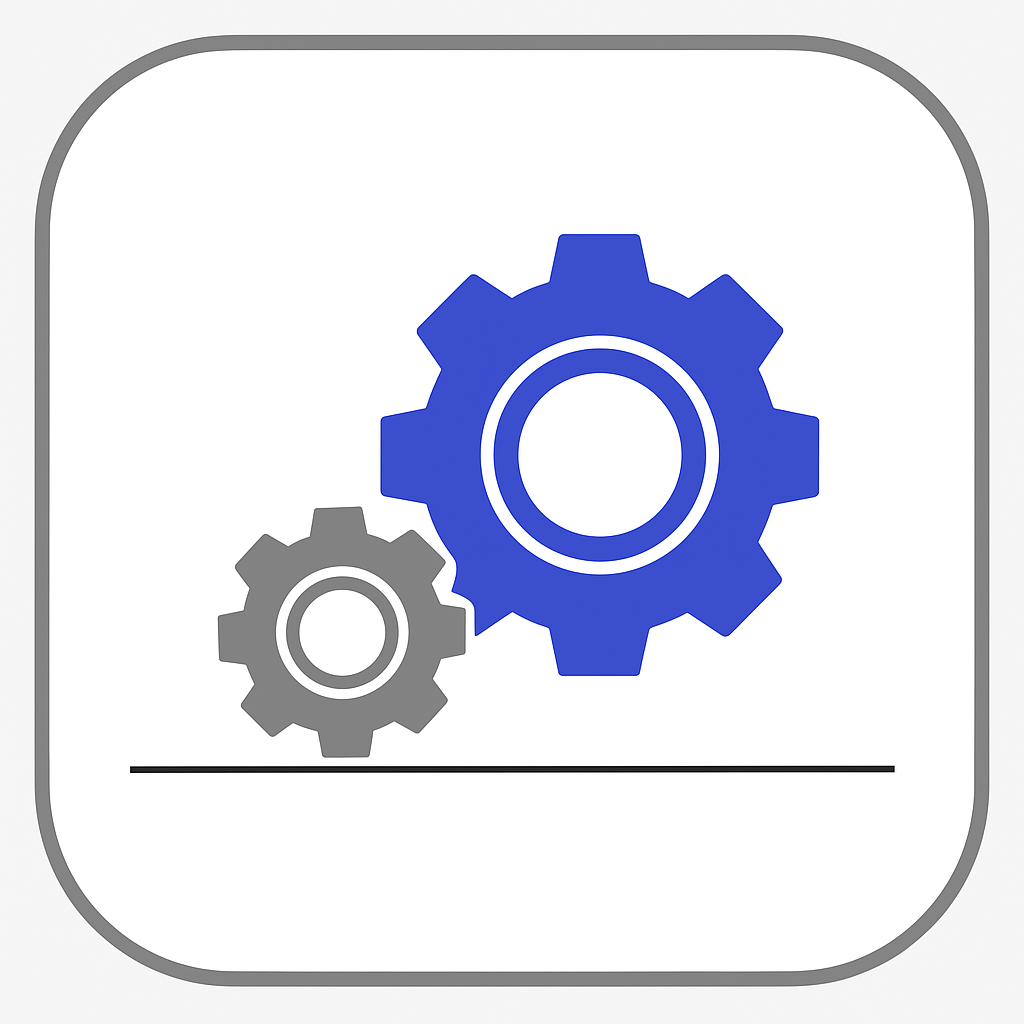
Small gears run faster, are easier to set in motion, but they have less strength and cause less impact. Large gears are harder to set in motion and slower, but once they’re turning, they can move more, heavier loads.
The Two Gear mental model is simple enough to be quickly adopted. While it draws a black-and-white distinction between fast and slow, tactical and strategic, there are many shades of grey in between. As a mental model, its purpose isn’t to oversimplify what is complex by nature, but to give us tools to be more effective when making decisions.
Every Monday morning, as I plan my week and go through my calendar, goals, and tasks, I pause for each meeting and moment to ask myself: what gear do I need? If it’s an operational meeting, an urgent decision, a fire to put out, it is Fast Gear. Execute. If it’s a discussion that shapes the next quarter, defines a strategy, or sets direction, it is Slow Gear. Pause, reflect, plan, act.
The best leaders I’ve worked with in my career are the ones who balance both. They know when to shift gears and create space, intentionally, for both.
Two gears. Use both.