The Spotlight Model
Jun 16, 2026
“My experience is what I agree to attend to.” - William James
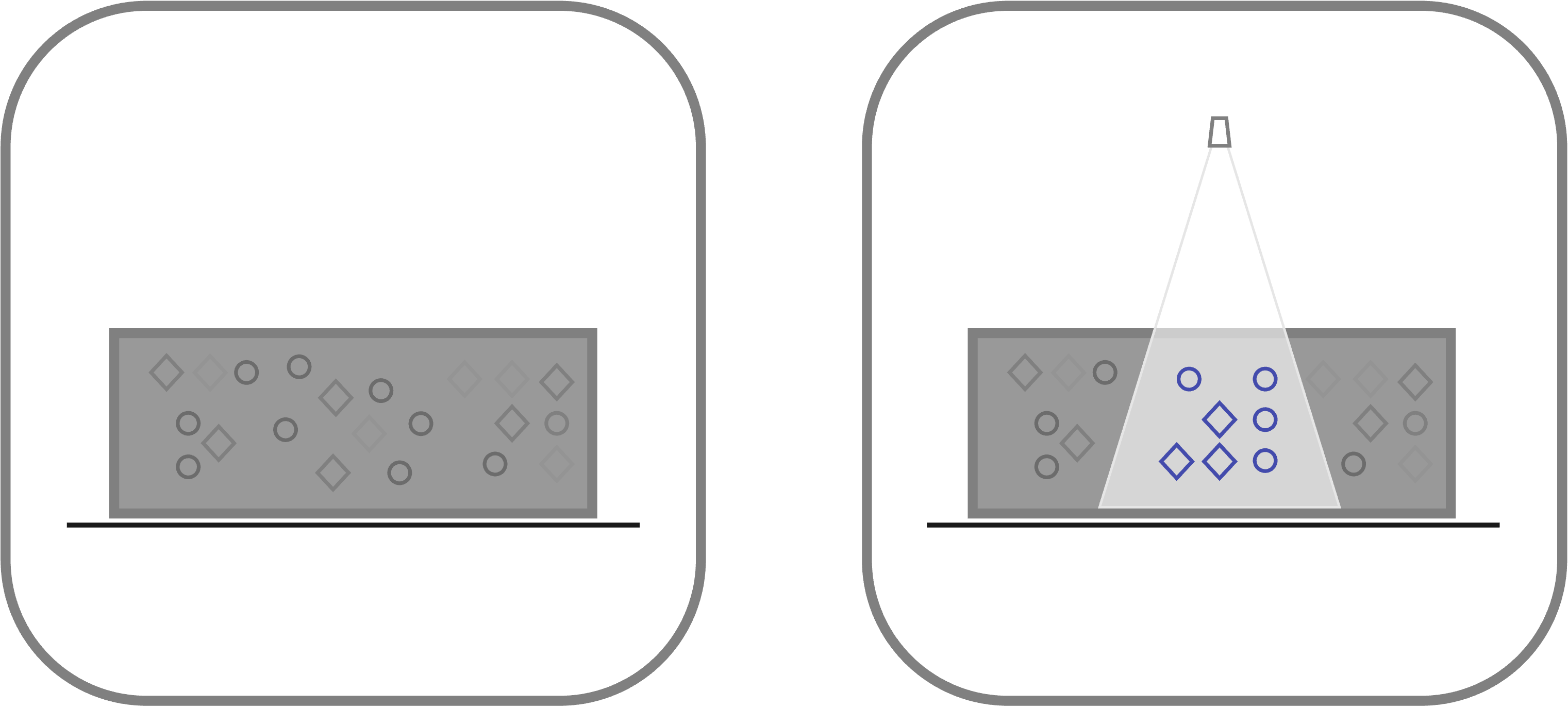
Attention works like a spotlight. It lights a small patch of the stage and leaves the rest in the dark. What falls inside the beam becomes your experience. What falls outside might as well not be there.
We do not take in everything in front of us. We take in what we point the light at. The tasks we finish, the problems we notice, the goals we reach, all of it follows where the beam lands.
A real model, not just a metaphor
The spotlight is more than a figure of speech. It comes from research into how attention actually works.
In the late twentieth century, the psychologist Michael Posner ran a famous experiment, the cueing task. He gave people a hint about where something might appear, then measured how fast they reacted. The reaction times showed attention behaving like a movable beam. It could be aimed at a place, tuned to a feature like a color or a shape, narrowed to a point, or widened to take in more. Attention is not a fixed lamp. It is a beam you steer.
That is the useful part. A beam can be aimed well or aimed badly, and when there is more to look at than light to give, where you aim it decides almost everything.
When the light is spread too thin
“Attention is a limited resource, so pay attention to where you pay attention.” - Howard Rheingold
The usual problem is spread. We keep the whole stage dimly lit, a little on everything, and nothing is ever bright enough to finish. You end up busy, lit up all over, and still dark on the one thing that matters.
For the opposite, look at how physics found the Higgs boson. The particle was proposed in 1964 and then stayed hidden for decades. In the early 1990s, CERN made a bet: pour its resources into one enormous instrument, the Large Hadron Collider, with detectors built to watch for one thing in particular. Thousands of people, more than a decade of work, billions of collisions, all with the beam held on a single question. In 2012 they found it. It was a feat of engineering, and just as much a feat of attention: one question, held in the light long enough to answer.
Aiming the spotlight
“The key is not to prioritize what’s on your schedule, but to schedule your priorities.” - Stephen Covey
You cannot widen the beam to cover everything, so the real work is choosing where it points. One old method still does most of the job: separate the urgent from the important. The urgent shouts. A message, a meeting, a small fire, it pulls the light toward itself whether it deserves it or not. The important rarely shouts. It is the work that shapes next year, and it waits quietly while the urgent eats the day.
So before the urgent takes the beam by default, decide what the light is for this week. Name the one or two things that, if they move, made the week worth it, and give them the brightest part. Everything else shares what is left.
What the beam cannot see
“When we focus on ourselves, our world contracts as our problems and preoccupations loom large. But when we focus on others, our world expands.” - Daniel Goleman
A spotlight has a cost built in. Everything it lights, it darkens something else. Aim it hard at one team’s targets and you can lose how they fit the whole. Aim it hard at this quarter and next year goes dark. Focus is worth it. The trap is forgetting that the dark parts of the stage are still there, and that sometimes the thing you most need is sitting just outside the light.
So widen the beam on purpose now and then. Step back, look at what you have stopped seeing, and check that the bright spot is still the right one.
Wrap-up
Attention is the one resource you cannot make more of. Hour by hour, you decide what gets the light and what stays dark, whether you choose it or not. The spotlight model is a small reminder to choose on purpose. Point the beam at what matters, hold it there long enough to matter, and look up often enough to know you are still aimed at the right thing.